Twelve years ago there was no such thing as a hardware wallet. To hold your own Bitcoin safely you needed a spare computer, a working knowledge of Linux, and the nerve to trust a setup you had wired together yourself. Most people did not have all three. They left their coins on exchanges and hoped for the best.
That changed on 29 July 2014, when Trezor shipped the Model One. It was the first hardware wallet ever made, and it created the category that now secures a large share of the world’s crypto. Trezor invented the hardware wallet, and with it, a practical way for ordinary people to be their own bank.
To mark the anniversary, Trezor is running Self-Custody Week and has asked its two founders to look back at where the idea came from, and forward at the problems self-custody still has not solved.
It started with a problem they had themselves
In 2011, Marek “Slush” Palatinus was running the first ever Bitcoin mining pool, single-handedly. As mining got harder, keeping the operation going was a strain, and a bigger question kept coming up in conversation: once you have bitcoin, where do you safely keep it?
Palatinus had met Pavol “Stick” Rusnák, an open-source and security engineer, at Brmlab, a Prague hackerspace, shortly before the city’s first Bitcoin conference in late 2011. Both were, in Rusnák’s words, computer nerds. Rusnák kept his own coins on a plain Linux laptop he used for nothing else, running the Electrum wallet, with the risks cut down by keeping everything else off the machine. It worked, but it was never something he would hand to anyone who was not an engineer. If it took that much care for them, it was out of reach for everyone else.
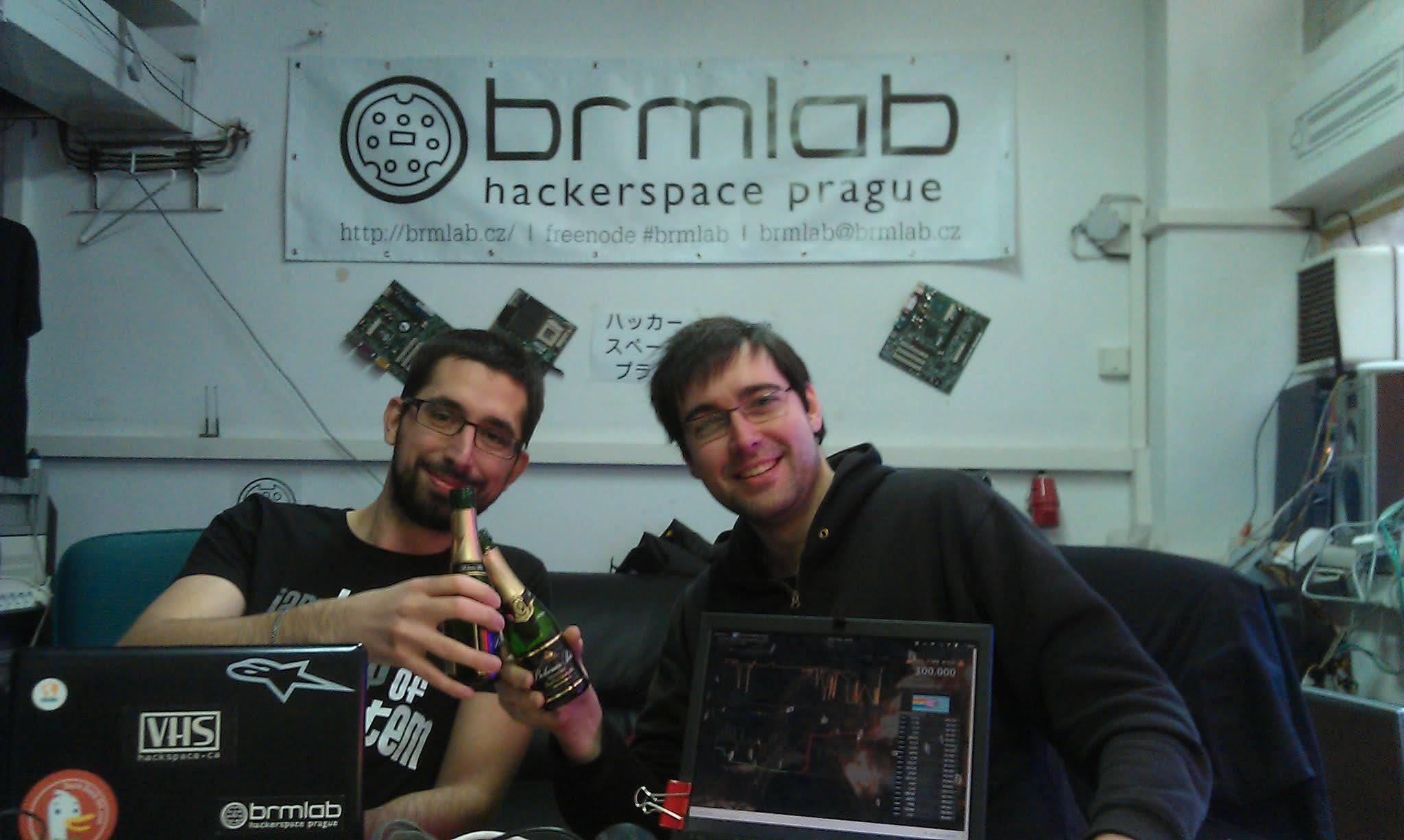
The two of them, later joined by Alena Vránová, started meeting regularly to work on it. They were not hardware designers and never set out to build a device. They had a concrete problem, and hardware turned out to be the logical answer: move the private key off the computer entirely, onto a small dedicated device that signs transactions in isolation and never exposes the secret to the internet.
Pavol Rusnák: “Marek and I were computer nerds. We ran Linux and we could keep our own coins safe. Even then, it never felt completely sure. The goal, half as a joke, was to make something our parents could use. They could never secure their own computers. If it only works for engineers, it doesn’t work.”
A prototype at a hackerspace, and one bitcoin to buy it
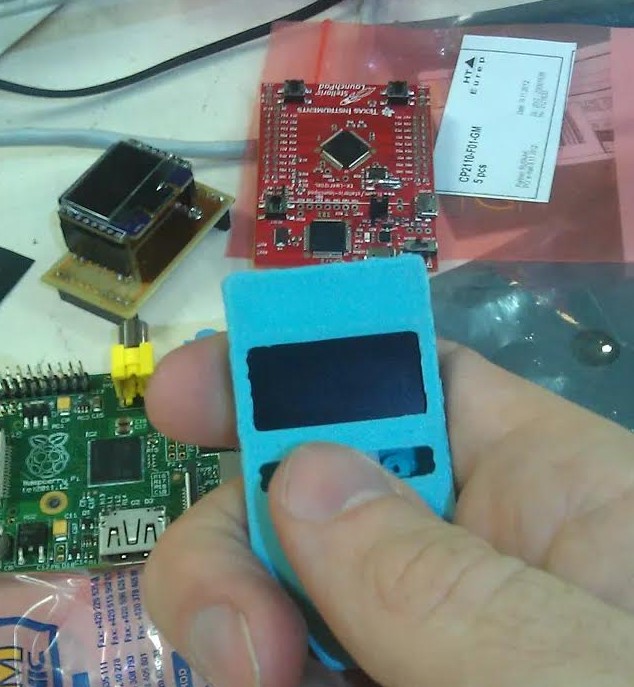
The first working prototype came together at the hackerspace in 2012. It was not pretty and not for the masses, but it worked, and it proved the concept could be built. By 2013 the team were confident enough to start a company around it. Rather than raise venture money, they pre-sold the devices.
The founders expected tiny demand, maybe a thousand devices for the few hundred people they knew from the Bitcoin Talk forum. Kickstarter rejected them. They ran their own pre-order instead using only bitcoin, and the manufacturer told them a thousand units was far too small, pushing for thirty thousand. They settled on a committed batch of thirty thousand and produced the first third, around thirteen thousand, to start. The interest let the company fund itself and stay independent, a decision that still shapes how Trezor operates today. The Model One sold for one bitcoin, which at the time was worth somewhere around 80 dollars.
What surprised them
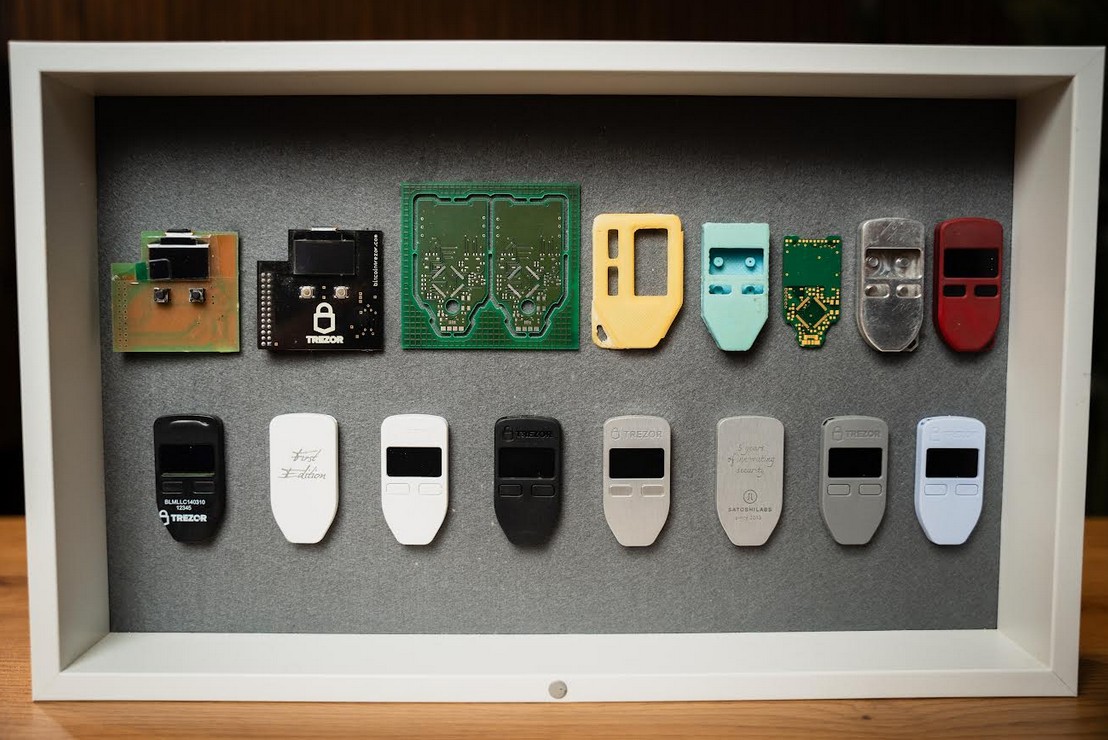
The hard part was not the one they expected. Rusnák had assumed the electronics would be the challenge. The first Trezor circuit board was the first he had ever designed, and it worked on the first attempt. The real problem was the plastic case. The device was so small that the margin for error on the enclosure was tiny, and getting the physical casing right turned out to be far harder than the electronics inside it.
Twelve years on: the same problem, a harder version
Twelve years later, the core problem has not gone away, it has changed shape. Most crypto holders still do not self-custody. Trezor’s position is that this is not because people don’t want control of their money, but because the tools and the education have not reached them yet.
The device has moved on a long way from the 3D-printed box. The current Trezor Safe 7 recently won the RedDot Award for product design and also ships with quantum-ready security. The principle underneath has not changed since 2014: the keys stay with the user, the code stays open, and anyone can check the work.
Pavol Rusnák: “When we started, the hard part was convincing people that self-custody was possible at all. Now the hard part is user experience. For years, custodial apps were simply easier to use, because big companies spent big budgets making them that way. That is why we have always pushed so hard on usability. A secure product that is hard to use ends up less secure, because people avoid it or make mistakes. What has changed lately is that exchanges have gotten harder to use, not easier, as new rules pile up. For the first time, holding your own keys can be the simpler option, not just the safer one.”