Most people assume that the digital asset economy lives entirely on screens. We imagine traders sitting in front of multi-monitor setups or casual investors checking apps on their phones during a commute. Yet, if you walk into a local convenience store, a shopping mall, or a gas station, you will likely see a kiosk glowing with a Bitcoin logo. These machines are not relics of a bygone era. They are active, vital infrastructure processing billions of dollars in transaction volume every year.
The persistence of these machines often confuses those who are fully integrated into the traditional banking system. Why drive to a location when you can buy from your couch? The answer lies in the limitations of the online exchange model. For many, the ability to send and receive crypto immediately offers a necessary alternative to the friction of online platforms. The user base for these kiosks is not just people who lack bank accounts. It includes privacy advocates, gig workers, and investors who value speed over convenience.
The Barrier of Traditional Banking
Online cryptocurrency exchanges act as gatekeepers. To use them, you generally need a functioning bank account to fund your wallet. This requirement immediately excludes a massive segment of the population. According to the FDIC, approximately 4.5 percent of U.S. households were “unbanked” in 2021, meaning no one in the household had a checking or savings account. This translates to millions of adults who operate entirely in cash.
For these individuals, a digital-only exchange is useless. They cannot link a checking account that does not exist. Bitcoin ATMs provide the only viable on-ramp for this demographic to participate in the digital economy. These machines accept physical cash and convert it directly into digital assets. This function is critical for financial inclusion. It allows someone who is paid in cash—such as a restaurant server, a contractor, or a day laborer—to save their earnings in an asset class that is not subject to physical theft or loss in the same way cash is.
Even for those who do have bank accounts, the connection between traditional finance and crypto is often fraught with difficulty. Many banks still flag transfers to crypto exchanges as “suspicious activity,” freezing customer accounts or declining transactions. A user might try to transfer funds to an exchange only to find their bank has blocked the move. The ATM bypasses this friction entirely. It does not require permission from a bank manager to operate. It simply requires the user to have the funds on hand.
Speed and Immediate Settlement
In the world of digital assets, prices move with incredible velocity. A five percent swing in value can happen in the span of an hour. When an investor sees an opportunity, they generally want to act on it immediately. This is where the traditional banking rails that support online exchanges often fail.
When you deposit money into an online exchange via an ACH transfer, it can take anywhere from three to five business days for those funds to clear. Even if the exchange allows you to “trade” immediately, you often cannot withdraw those assets until the bank transfer is finalized. You are essentially trading with an IOU. If you need to move that Bitcoin to a secure wallet or use it for a payment, you are stuck waiting for the slow gears of the legacy financial system to turn.
Bitcoin ATMs operate on a different timeline. The settlement is effectively instant. You insert bills, and the machine broadcasts the transaction to the blockchain. Within minutes (depending on network congestion), the assets are in your wallet. There is no three-day waiting period. There is no risk of a bank reversing the transfer a week later.
This speed is particularly valuable during weekends and holidays. The stock market and the banking system adhere to rigid operating hours. They close at 5:00 PM. They close on weekends. They close on federal holidays. The crypto market never closes. If a market event happens on a Sunday morning, an online exchange user waiting for a wire transfer is helpless. A user near an ATM can act immediately.
Privacy and Data Minimization
We live in an era of constant data surveillance. To sign up for a major online exchange, a user must upload high-resolution scans of their driver’s license, provide their social security number, link their bank login credentials, and sometimes even record a video of their face. This is known as KYC (Know Your Customer) compliance. While necessary for regulation, it creates a massive “honeypot” of sensitive data.
Centralized exchanges are frequent targets for hackers. When an exchange is breached, it is not just the money that is at risk. The personal identity data of millions of users can be stolen and sold on the dark web. For security-conscious individuals, the risk of handing over a full identity profile to a third-party startup is unacceptable.
Bitcoin ATMs typically operate with a tiered verification system. For smaller transaction amounts, the data requirements are often much lower than those of an online exchange. A user might only need to provide a phone number or scan an ID, without linking a bank account or providing a social security number.
This concept is known as data minimization. It is the practice of collecting only the data that is strictly necessary to process the transaction and nothing more. By using an ATM, a user limits their digital footprint. They are not leaving a permanent record of their bank account details on a server that could be compromised years down the road. For those who view Bitcoin as a tool for privacy, the ATM is a superior interface.
The Assurance of Self-Custody
One of the most painful lessons in the history of cryptocurrency is the risk of leaving assets on an exchange. When you buy Bitcoin on a popular app and leave it there, you do not actually own the Bitcoin. You own a claim check. The exchange holds the private keys. If that exchange goes bankrupt, pauses withdrawals, or is managed poorly, your money is gone. This has happened repeatedly, wiping out the savings of investors who trusted third parties.
Bitcoin ATMs naturally encourage—and often force—self-custody. To use most ATMs, you must have your own digital wallet address ready to receive the coins. The machine does not hold the money for you. It sends the Bitcoin directly to a wallet that you control.
This distinction is fundamental. It aligns with the core ethos of cryptocurrency: “Not your keys, not your coins.” By requiring users to set up their own wallets before visiting the machine, ATMs serve as an educational tool. They teach users how to manage their own security.
When a transaction is complete at a kiosk, the user walks away with the assets in their possession. There is no counterparty risk. There is no fear that the CEO of the ATM company will abscond with the funds, because the funds have already been delivered. This immediate finality provides a peace of mind that a balance on a screen cannot match.
Bridging the Cash Economy
The gig economy has exploded in recent years, and a significant portion of it still runs on physical currency. Tipped workers, landscapers, independent contractors, and small business owners often find themselves with surplus cash. In a digital-first world, holding large amounts of paper currency is a liability. It is vulnerable to theft, fire, or loss.
Depositing large amounts of cash into a traditional bank branch can be an interrogation process. Tellers may ask intrusive questions about the source of the funds if the amount exceeds certain thresholds. The depositor is treated with suspicion until proven innocent.
Bitcoin ATMs offer a seamless way to digitize this cash. A contractor who gets paid for a job on a Friday afternoon can stop by a kiosk and convert those bills into Bitcoin or a stablecoin (a cryptocurrency pegged to the dollar) within minutes. They have effectively “banked” their earnings without stepping foot in a bank.
Once the money is in digital form, it becomes globally mobile. This is particularly relevant for remittance. Immigrant communities frequently use these machines to send value back to their home countries. Sending cash via traditional money transfer services often involves high fees and slow delivery times.
By converting cash to crypto at an ATM, a user can send the funds to a family member’s digital wallet on the other side of the world instantly. The recipient can then sell the crypto for local currency or use it directly. The ATM acts as the physical bridge between the local cash economy and the global digital network.
The Physicality of Trust
There is a psychological component to finance that software engineers often overlook. Humans are tactile creatures. We trust what we can see and touch. For a person who is new to cryptocurrency, the idea of sending money into the “ether” of the internet is terrifying. It feels abstract and reversible.
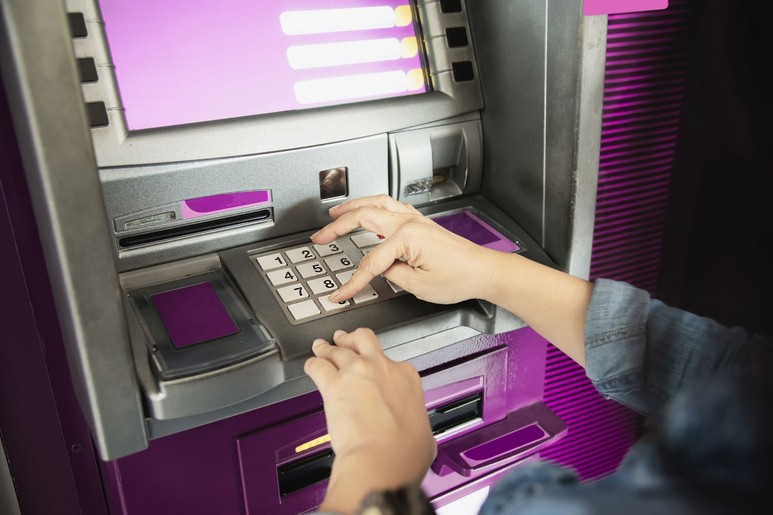
A physical machine provides a tangible anchor. The user stands in front of a kiosk. They feed physical bills into a validator. They hear the machine process the cash. They get a printed receipt or a digital confirmation text. This physical interaction mimics the vending machine experience that everyone understands. It feels real.
This physicality builds trust. If something goes wrong, there is a phone number on the side of the machine. There is a location they can return to. In contrast, when an app glitches or an exchange freezes an account, the user is often left screaming into the void of an automated chatbot.
Furthermore, these machines are often located in trusted neighborhood businesses—delis, gas stations, and malls that the user visits regularly. The association with a familiar physical environment reduces the perceived risk. It normalizes the transaction. It makes buying Bitcoin feel as mundane as buying a lottery ticket or withdrawing cash for a night out.
Conclusion
The narrative that Bitcoin ATMs are merely a stopgap until everyone adopts digital banking is false. They are not a temporary bridge; they are a distinct utility. They serve the unbanked, the privacy-conscious, the cash-paid worker, and the investor who demands immediate settlement. They offer a layer of speed, security, and physical assurance that online exchanges struggle to match. As long as cash exists, and as long as individuals value the right to control their own assets without intermediary permission, the glowing kiosk in the corner of the shop will remain a vital entry point into the future of finance.