After $9.3 billion in crypto fraud last year and millions of Bitcoin lost forever to forgotten seed phrases, a hardware startup backed by billionaire Tim Draper is rewriting the rules. Here’s why the Ryder One might be the most important crypto security breakthrough of 2025.
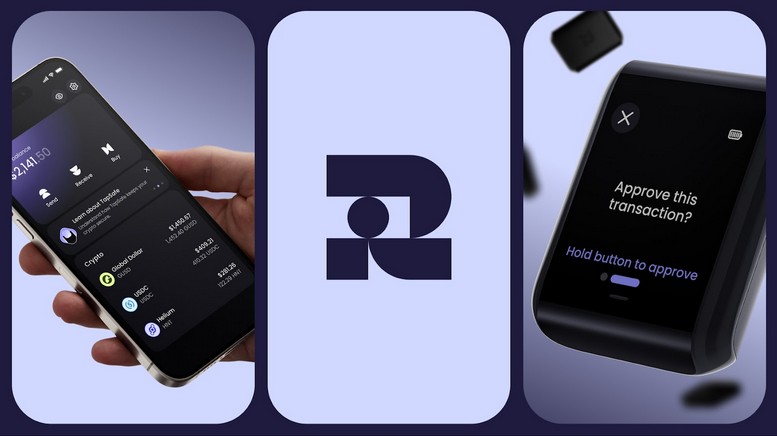
We’ve seen it over and over again, and I can almost guarantee someone you know has lost access to their cryptocurrency not because of a faulty contract address or scam, but rather due to a lost or hacked seed phrase. If you’re lucky enough to not know anyone in this category, you’re a rare one. In fact, according to the August 2025 CoinLedger report, between 2.3 and 3.7 million Bitcoin, (worth over $150 billion at today’s prices), are lost forever. Further, a report by TRM Labs estimated that 80% of these hacks stemmed from private key exploits and front-end hacks, like seed phrases.
In 2024 alone, $9.3 billion was stolen in crypto fraud, with vulnerable users targeted precisely because managing seed phrases is so complicated that people make fatal mistakes. Meanwhile, the hardware wallet industry is booming—projected to grow from $350 million in 2025 to $2.55 billion by 2033, a staggering 28.79% annual growth rate. Though, there is some uncomfortable truth behind it…the industry has been selling the same flawed solution for a decade. Write down 24 words. Store them safely. Don’t lose them. Don’t let anyone see them. Good luck.
The Crisis No One Talks About
Let me paint you a picture of the current state of crypto security. Ledger, the market leader, suffered a massive data breach in 2020 that exposed 270,000 customer records. Trezor users have been targeted by sophisticated phishing attacks that exploit the complexity of seed phrase management. Tangem solved the cable problem but created a new one: you’re signing transactions blind, with no screen to verify what you’re approving. Adding to this, a lack of education.
A 2025 study published by the ACM revealed that only 43.4% of crypto users could correctly explain what a seed phrase was. Think about that. More than half of people holding their own crypto don’t fully understand the single most critical piece of their security setup.
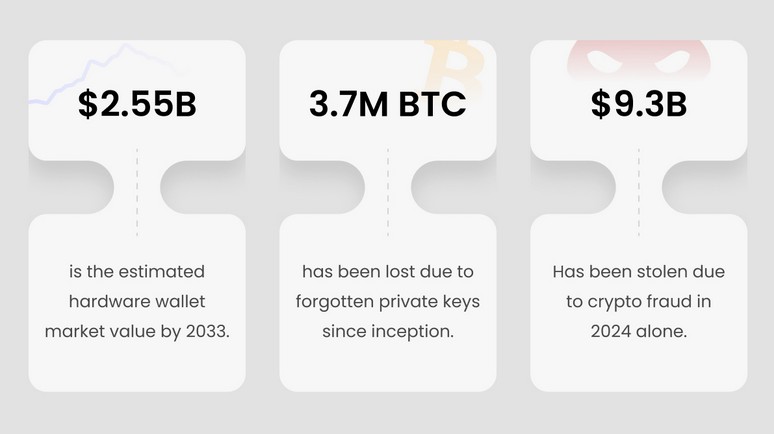
The problem isn’t that people are careless. The problem is that we’ve built a system that requires perfect human behavior in an imperfect world. You can’t forget your seed phrase. You can’t lose it. You can’t let it get stolen. You can’t write it down somewhere too obvious, but you also can’t hide it so well that you forget where it is. It’s an impossible standard, and people are losing life-changing amounts of money because of it.
Enter The Team That Said “Enough”: Ryder
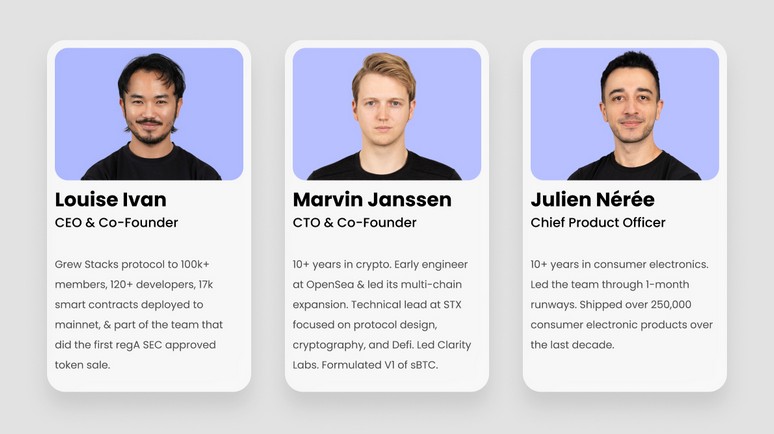
Louise Ivan Valencia Payawal grew up in Bulacan, Philippines. In 2015, he won Startup Weekend ASEAN, which set him on an entrepreneurial path that would eventually lead to Silicon Valley. He earned a double master’s degree in green IT from the University of Amsterdam and Vrije Universiteit in the Netherlands, then joined Stacks, a Bitcoin-based smart contract platform, as Growth Lead, building a global cult of over 100,000 members. During this time, he identified a recurring and pressing problem: people wanted to own their crypto, but the tools were too complicated, too fragile, and too intimidating.
“We created Ryder because we experienced firsthand how fragile and intimidating self-custody can be. For too long, crypto has relied on seed phrases—a single piece of paper that could decide the fate of your entire wallet.” Louise Ivan Valencia Payawal, CEO & Co-Founder commented on building Ryder.
He teamed up with Marvin Janssen, a veteran developer who’d been working on Clarity smart contracts and blockchain infrastructure for years. Marvin understood the technical side deeply. He knew that the secure element chips existed, that NFC encryption was mature, and that there was a better way to handle key management. The technology was there. It just needed someone to put it together correctly.
“With Ryder One, we set out to make crypto feel natural and human. As easy as tapping your phone. By simplifying the overall experience and rethinking recovery, we’re opening the door for anyone, anywhere to truly and confidently own and use crypto.”— Marvin Janssen, CTO & Co-Founder.
Then came Julien Nerée, the Chief Product Officer with over a decade of experience in high quality hardware manufacturing and product development. Julien stepped into crypto in 2017 as a retail investor and noticed the major issue of usability with crypto hardware products. He joined Louise and Marvin with a singular mission: make self-custody effortless for everyone without trading design for safety.
The three of them started Ryder in 2022. What followed was brutal. They survived on one-month runways—literally not knowing if they’d have money to pay the team next month. Their team of seven stayed together through it all, working nights and weekends, iterating on prototypes, testing with real users, and refusing to compromise on either security or simplicity.
“Three years, countless iterations, one mission: to make self-custody effortless for everyone.”— Julien Nerée, CPO.
In 2023, they launched a Kickstarter campaign and shipped thousands units to early backers. The feedback was overwhelming. Users loved it. Security researchers respected it. And in October 2025, billionaire venture capitalist Tim Draper, known as the man who bought 30,000 Bitcoin from the Silk Road auction and has backed companies like Tesla, Skype, and Coinbase, led Ryder’s $3.2 million seed round.
Tim Draper doesn’t invest in incremental improvements. He invests in paradigm shifts. And when I asked him why Ryder, his answer was simple: “What the crypto industry needs more than anything right now are solutions that don’t require in-depth technical knowledge while maintaining high security standards. This is exactly what I saw in Ryder’s hardware wallet with its minute-or-under setup and offline design that keeps users’ holdings safe.”— Tim Draper, Founder of Draper Associates.
The funding round also included Anatoly Yakovenko (co-founder of Solana), Joe McCann (CEO of Asymmetric), and venture firms Borderless, Semantic, Smape, and VeryEarly. These aren’t people who throw money at every crypto project. They’re backing Ryder because they see what I see: a fundamental rethinking of how crypto security should work.
Watch: The Full Review
Cyber Scrilla (129K subscribers) breaks down everything about the Ryder One
What Makes Ryder One Different: The TapSafe Revolution
Let me explain TapSafe in a way that makes sense. Traditional wallets use a seed phrase—12 or 24 words that represent your master key. Lose those words, lose your crypto. Forever. No customer service. No password reset. Gone.
Watch: CTO, Co-Founder Marvin Janssen Explains TapSafe Technology
Marvin Janssen, Ryder’s CTO, discusses the technical challenges leading to asset loss and how TapSafe solves it
Ryder uses Shamir Secret Sharing, a cryptographic technique invented by Adi Shamir (the “S” in RSA encryption). Instead of one seed phrase that’s a single point of failure, your master key is split into encrypted fragments. Think of it like a vault that requires multiple keys to open—but you get to decide how many keys exist.
Here’s how it works in practice:
The TapSafe Backup System
Your Ryder One houses the EAL6+ secure element chip. The information can’t be extracted, even with physical access. The backups are stored in fragments or sections using Shamir Secret Sharing technology.
Fragment 1: The Recovery Tag is a coin sized NFC tag that comes with your wallet. Keep it somewhere safe—your home safe, a safety deposit box, with a trusted family member. If you lose it, it doesn’t affect your security because it isn’t enough to restore your full data.
Fragment 2: Your phone backup, which can either be stored directly on your device or encrypted and stored in your iCloud or Google Drive. Even if someone hacks your cloud account, this fragment alone is also useless.
Fragment 3: Recovery Contacts allow users to have multiple people as part of their wallet back up in case they lose their phones, Recovery Tags, and the actual Ryder One hardware wallet altogether. These recovery contacts cannot see any information on the wallet or seed phrase, but can hold shares of the data that helps restore a lost or missing wallet.
The genius is in the redundancy. Lose your wallet? Use your phone and Recovery Tag to restore everything. Lose your phone? Get a new one, access your cloud backup, and use your Recovery Tag. Lose your Recovery Tag? You still have your wallet and cloud backup to create more Recovery Tags.
TL;DR: Even if you lose your wallet, your phone, your cloud account, and all your Recovery Tags, you can still recover your wallet through its seed phrase or Recovery Contacts. It’s a system designed for the real world, where people lose things, forget things, and make mistakes.
The Hardware: Premium Design Meets Military-Grade Security
The Ryder One is sleek in design. The team claims to have gone through 23 mechanical iterations of the design over the years. The device is an anodized aluminum body, tempered glass touchscreen, and an “Infinity Edge” LED band that lights up during secure operations. It’s IP67 rated—dust and splash proof.
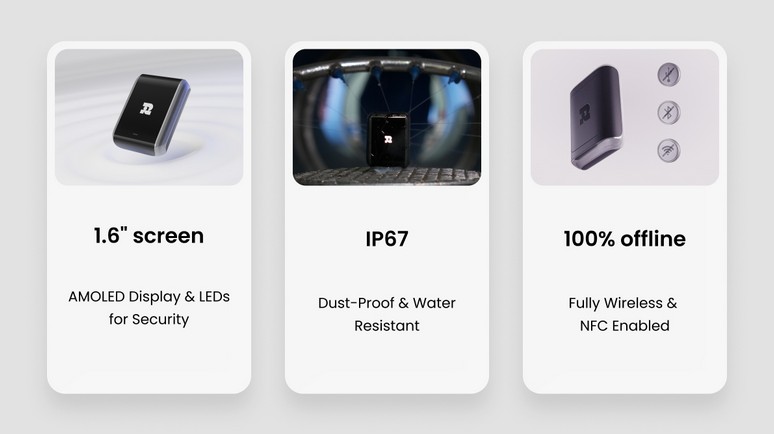
The secure button and LED are wired directly to the Infineon EAL6+ secure element—the same military-grade chip used in passports and government IDs. When you press the button to confirm a transaction, you’re talking directly to the secure chip. There’s no middleware that could inject malicious code. The LED confirmation comes straight from the chip too.
Marvin explained it to me this way: “Most hardware wallets have a general-purpose processor that talks to the secure element. That creates an attack surface. We eliminated it. The button, the LED, and the secure element form a closed loop that nothing else can touch.”
How to Use Ryder One: The 60-Second Setup
One of the biggest selling points is how stupidly simple it is to get started. I timed myself. From unboxing to having a fully backed-up wallet took me 53 seconds. Here’s exactly how it works:
Step-by-Step Setup Guide
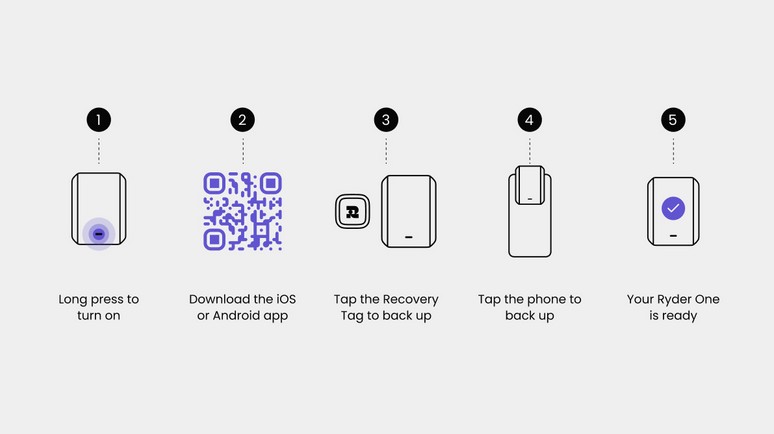
The setup is very simple. Once you download the Ryder App and turn on your Ryder One, the app and device walk you through the entire minute-long process. Once your Ryder One is set up, you can create a backup using the Recovery Tag accessory that comes with every wallet. It really is that simple.
Sending and receiving crypto is just as straight-forward. To send crypto, tap the “Send” button in the Ryder Mobile App. Once you enter the amount and recipient address, you just tap your Ryder One on your phone and confirm the transaction in the wallet and app. The LED lights and display walk you through the entire process.
No cables. No drivers. No confusing menus. Just tap, confirm, done.
Watch: Complete Setup Walkthrough
Step-by-step setup guide showing the entire process from unboxing to first transaction
How Ryder Stacks Up Against the Competition
I’ve tested the Ryder One alongside the Tangem Wallet, Ledger Flex, and Trezor Safe 5 for the past six months. Here’s the honest comparison:
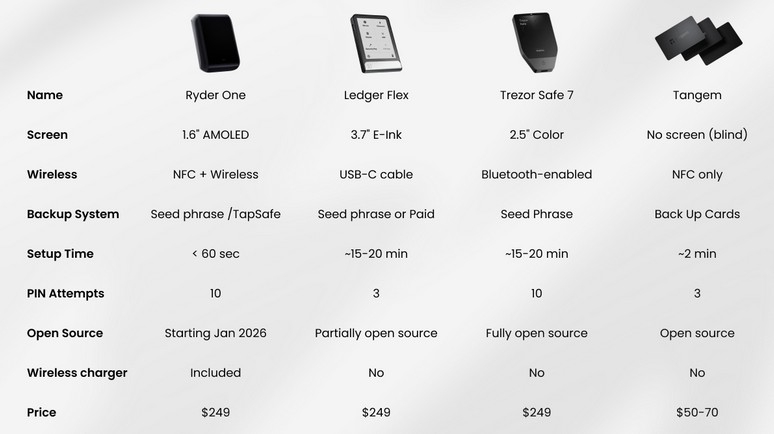
Tangem is cheaper and ultra-portable, but blind-signing transactions are a dealbreaker for a lot of people. It’s daunting to potentially lose money because of the inability to verify what you’re approving.
Ledger Flex has a large screen and solid security, but it’s closed source, requires cables, and the recovery service costs extra. Plus, after the 2020 data breach, trust is still an issue.
Trezor Safe 7 is fully open source, which is fantastic for transparency. But it’s bulkier, only gives you 3 PIN attempts before wiping, and does not come with a wireless charger – unless you took advantage of the pre-order promotion.
Watch: Is Ryder One a Ledger Killer?
Independent reviewer compares Ryder One against Ledger and other major hardware wallets
Addressing Every Concern: The Deep Dive
I read every comment on Cyber Scrilla’s review video. I talked to security researchers. I joined the Ryder Discord and asked the hard questions. Here are the real concerns people have, and the honest answers.
Concern #1: “Is Ryder’s cloud backup actually safe? What happens if someone gets into my iCloud?”
This was my first concern too. Ryder gives users the option to store backups on the phone’s storage too. When it comes to cloud storage, here’s the technical reality: the piece stored in the cloud is encrypted using AES-256 (the same encryption standard used by banks and militaries) and it’s only one fragment of your key.
Even if someone somehow accessed your cloud backup, which would require them to first compromise your Apple ID or Google account, which have their own two-factor authentication, they’d still need your Recovery Tag AND your physical wallet to reconstruct your master key.
Shamir Secret Sharing is mathematically proven. Having one fragment gives you zero information about the master key. It’s not “partial information”—it’s literally useless without the other fragments. Plus, cloud backup is optional. If you don’t want it, don’t enable it. You can still use TapSafe with just your wallet and Recovery Tags. Or you can write down your seed phrase the old-fashioned way. Ryder gives you options, it doesn’t force you into anything.
Concern #2: “It’s not open source yet. How can I trust it?”
Fair question. Ryder is currently working with Halborn, one of the top global blockchain security companies, for a comprehensive third-party audit. The audit is scheduled to complete in December 2025.
Open sourcing is set to begin in January 2026, starting with the TapSafe algorithm and hardware schematics, then firmware, and finally the mobile app. This is actually the standard approach for security products—audit first, then open source. Ledger and Tangem are still closed source, and people trust them with billions.
Although Trezor is fully open source today, going public with their code exposed some vulnerabilities. Open source is great for transparency, but it’s not a silver bullet. What matters more is the security architecture and the audit results.
Concern #3: “Limited coin support. What if I hold XRP, ADA, or other altcoins?”
Currently, Ryder supports Bitcoin, Ethereum, Solana, Stacks and tokens across the Solana and Ethereum networks, including USDT and USDC. If you have a diverse portfolio across 20 different chains, this is a limitation.
But here’s the good news: Adding more networks is Ryder’s top priority, and it’s just a firmware update away. The hardware is already capable—it’s the software integration that takes time. Julien told me they’re working on integrating other blockchains, including BNB, Ripple, Cardano, Avalanche, and others.
According to CoinGecko data, Bitcoin and Ethereum alone represent over 60% of the total crypto market cap. Add Solana and stablecoins, and you’re covering the vast majority of what most people actually hold.
My recommendation: If you need massive coin support today, wait a few months or use Ledger/Trezor. If you primarily hold BTC, ETH, and SOL like most people, Ryder already has you covered.
Concern #4: “$249 is expensive. Why not just get a Tangem for $50?”
Tangem is cheaper, yes. But you’re paying for convenience at the cost of security visibility. With Tangem, you’re blind-signing transactions with no screen. If you send to the wrong address or approve a malicious smart contract, you won’t know until it’s too late.
I’ve personally seen this happen. A friend approved what he thought was a simple token swap on his Tangem. It was actually a contract that gave unlimited approval to drain his wallet. He lost $8,000. With a screen, he would have seen “Approve: Unlimited USDT” and stopped immediately.
Ryder costs the same as Ledger Flex and Trezor Safe 5 ($249), but with the ongoing discount it’s around $200. You’re getting wireless convenience + screen security + modular backup system + 60-second setup. That’s worth the premium if you’re holding serious money.
Think of it this way: If you’re holding $10,000 in crypto, spending $200 on security is 2% of your holdings. Would you store $10,000 in cash in a $50 lockbox, or would you invest in a proper safe?
Concern #5: “What happens when the battery dies in 3-5 years?”
This is a common concern with battery-powered wallets. Here’s the answer: even if the battery completely dies and won’t hold a charge anymore, you can still use the wallet by placing it on the wireless charging pad.
It will power on and function normally while on the charger. Your crypto is never locked out. You can still sign transactions, access your funds, and even recover to a new device using your TapSafe backups.
Plus, you always have your seed phrase as a nuclear option. If the wallet is completely dead and you don’t want to buy a new one, you can recover your funds on any other wallet (Ledger, Trezor, MetaMask, etc.) using your 24-word seed phrase.
Battery lifespan: The Ryder One uses a lithium-polymer battery rated for 500+ charge cycles. With normal use (charging once a week), that’s 10+ years.
Concern #6: “It’s so new. Should I wait for it to mature?”
Valid concern. Early prototypes started in 2023, Kickstarter shipped in 2024, and the full market launch was early 2025. It’s definitely a newer player compared to Ledger (founded 2014) and Trezor (founded 2013).
The upside: As an early adopter, your feedback directly influences the product roadmap. I’ve seen this with Tangem—early users helped shape what it became. Ryder is actively listening to their community and shipping updates based on user requests.
The hardware itself is built on mature technology. The Infineon EAL6+ chip has been battle-tested for years in passports and payment cards. NFC encryption is a solved problem. The innovation is in how Ryder combines these proven technologies.
My take: If you value being part of shaping the future and want the latest tech, now’s the time. If you want battle-tested stability with years of track record, wait 6-12 months and see how the community responds.
Watch: CEO Louise Ivan Payawal on Tim Draper Investment
Louise discusses the vision behind Ryder and how they’re making crypto accessible to everyone
The Verdict: Who Should Buy Ryder One?
After six months of use, the Ryder One has become my primary hardware wallet. It’s the first device that doesn’t feel like I’m choosing between security and convenience. I get both.
The TapSafe backup system is the smartest approach to wallet recovery I’ve seen in five years of testing hardware wallets. The wireless NFC connectivity is seamless. The screen gives me the verification I need without the bulk of traditional wallets. Additionally, the build quality feels premium in a way that justifies the $249 price tag.
Is it perfect? No. Limited coin support and a minimal app hold it back from being the universal recommendation. If you need extensive altcoin support or want fully open-source firmware today, you should wait. However, if you primarily hold BTC, ETH, and SOL, and you value simplicity as much as security, this is the wallet you’ve been waiting for. The fact that billionaire Tim Draper, Solana founder Anatoly Yakovenko, and other top crypto investors are backing it tells you everything you need to know.
“Complicated user interfaces and experiences are a known barrier to entry in the web3 industry. Ryder is simplifying the entire experience, which inadvertently helps with security. From tap-to-pay to removing the seed phrase, a major vulnerability in most wallets, Ryder is setting a new standard for simplicity, usability, and safety.”— Joe McCann, CEO of Asymmetric
Find out more about Ryder One here.