• Skip to main content
  • Skip to secondary menu
  • Skip to primary sidebar
  • Skip to footer
  • Upcoming Events
    • CFO StraTech, Dubai (September 2, 2026)
    • PROFINEXPO, Bangkok (September 3-4, 2026)
    • Web3 Warsaw (September 9-10, 2026)
    • European Blockchain Convention, Barcelona (September 16-17, 2026)
    • Forex Expo, Dubai (September 22-23, 2026)
    • Digital Assets Week in London (October 6-7, 2026)
    • 5th Fintech Week & Expo, Frankfurt (October 7-8, 2026)
    • TOKEN2049, Singapore (October 7-8, 2026)
    • Money20/20 USA, Las Vegas (October 18-21, 2026)
    • Digital Asset Forum, New York (November 13, 2026)
    • iCrypto Awards: People’s Choice, Dubai (December, 2026)
    • Digital Asset Forum, London (February 1-2, 2027)
  • Past Events

Crypto Reporter

Online magazine about cryptocurrencies, NFTs, DeFi, GameFi and other blockchain technologies

Join us on Telegram: https://t.me/crypto_reporter
  • News
    • News Feed
    • Cryptocurrencies
      • Bitcoin
      • Altcoins
    • Payment solutions
    • Exchanges
      • Binance
      • bitFlyer
      • Bitfinex
      • CBOE
      • CME
      • Coinbase
      • Coincheck
      • Coinfloor
      • Nasdaq
      • Poloniex
    • Regulations
      • Australia
      • Belarus
      • China
      • Europe
      • India
      • Iran
      • Israel
      • Japan
      • North Korea
      • Philippines
      • Portugal
      • Russia
      • South Korea
      • Thailand
      • Turkey
      • Venezuela
      • Vietnam
      • United States
    • Blockchain platforms
    • Crypto news in brief
    • Stats & trends
    • Reviews
      • Ambrosus
      • ATN
      • Dash
      • Green Power Exchange
      • Power Ledger
      • ShapeShift
      • Waltonchain
      • Cryptocurrency market capitalization can top 4 trillion USD, under conservative estimates
    • Opinion
    • Sponsored
  • Press Releases

Ethereum charts a path beyond the blockchain trilemma, Buterin says

January 11, 2026 By Crypto Reporter

Ethereum co‑founder Vitalik Buterin says recent protocol enhancements have effectively addressed the decades‑old “blockchain trilemma” — the idea that networks must sacrifice decentralization, security or scalability to optimize the others — by combining innovations now operating on or nearing deployment on the mainnet.
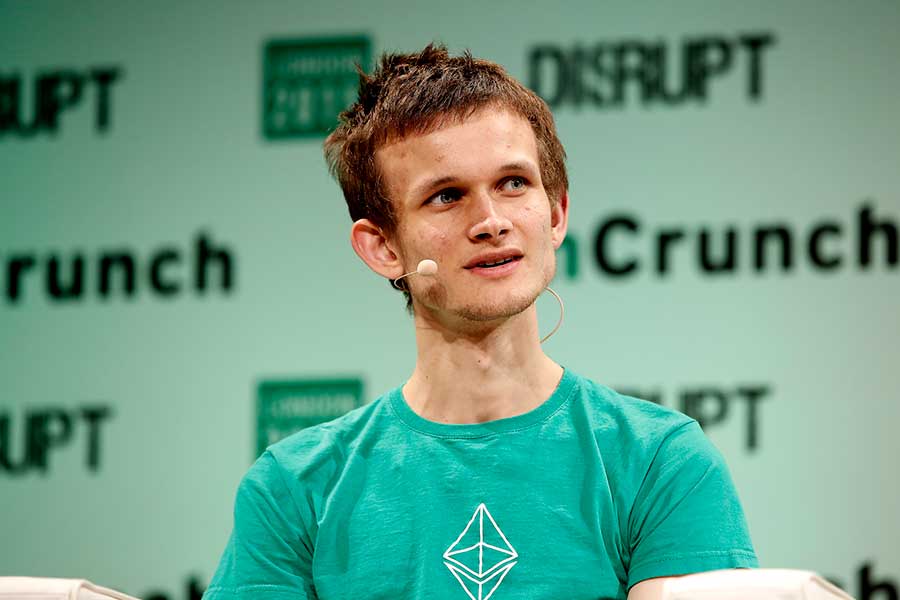
In a post on the social platform X, Buterin framed the convergence of two developments as a defining moment for the network. The first is Peer‑to‑Peer Data Availability Sampling (PeerDAS), a core feature introduced with the Fusaka upgrade late last year that is live on Ethereum’s mainnet and designed to reduce the burden on individual nodes by sampling small subsets of data rather than requiring full downloads.

The second component involves zero‑knowledge Ethereum Virtual Machines (ZK‑EVMs), which are now at a production‑quality performance stage with ongoing safety work remaining before broader deployment, according to Buterin. Together, these technologies aim to boost throughput while preserving decentralization and security — a balance that has eluded blockchains for years.

Buterin wrote that this pairing shows the network’s evolution from incremental improvement to a structurally different decentralized system capable of higher bandwidth consensus without compromising its foundational principles.

The concept of the blockchain trilemma originates from industry theory that earlier networks could optimize only two of the three core properties at once. For example, first‑generation systems offered strong decentralization and security but limited throughput, while some newer chains raised throughput at the expense of decentralization or trust assumptions. Buterin’s comments emphasize that separating data availability, execution logic and validation allows Ethereum to tackle these constraints concurrently.

PeerDAS works by allowing nodes to verify that transaction data exists without downloading the entire dataset, using erasure coding to reconstruct missing pieces. This approach significantly lowers computational and storage requirements on validators and is expected to support higher transaction bandwidth.

Looking ahead, Buterin outlined a multi‑year roadmap with further scaling milestones. In 2026, Ethereum plans to raise gas limits not dependent on ZK‑EVMs and introduce initial opportunities for validators to run ZK‑EVM nodes. Between 2026 and 2028, upgrades will focus on gas repricing and structural changes to the state, including moving execution payloads into data blobs to enable safer higher throughput. From 2027 onward, ZK‑EVMs are expected to play an increasing role in block validation, with potential further major gas increases through 2030.

Buterin also flagged longer‑term ambitions for distributed block building to minimize central points of transaction inclusion and promote geographic fairness, though he said such features will take time to mature.

Filed Under: General News, Latest News, News Tagged With: Buterin, Ethereum

Primary Sidebar

Press Releases

Best Crypto to Watch? XRP and Solana Have Momentum, but IceBull Is Writing a Fresh Stage 1 Story

August 27, 2026

SQD Partners with Google Cloud to Expand Blockchain Analytics

August 26, 2026

The New Money Curriculum: Students Want Crypto Taught in College. Most Schools Aren’t Teaching It.

August 26, 2026

Sumsub Powers Investor Verification for Caliber’s PURE Pickleball & Padel Tokenized Real Estate Offering

August 26, 2026

Hawkeye Systems Rebrands as Hawkeye Digital, Inc.

August 26, 2026

Follow Us

Web3 Warsaw

European Blockchain Convention

Forex Expo Dubai 2026

5th Fintech Week & Expo 2026

Money20/20 USA

TOKEN2049 Singapore

iCrypto Awards

Footer

Crypto Reporter is an online magazine about cryptocurrencies, NFTs, DeFi, GameFi and other blockchain technologies
About us
Contact us
Submit press-release

Search

2017-2026 Crypto Reporter