If Day 1 was about building the foundations, Day 2 was about what happens once those foundations are ready.
The final day of EBC12 moved deeper into practical use cases, from collateral mobilisation and tokenised money market funds to portfolio allocation, trading, custody and regulation.
Across the stages, a common theme emerged: the technology has largely proved what it can do. Now the focus is shifting towards where it creates measurable value, how capital is being deployed and what still needs to change before adoption reaches scale.
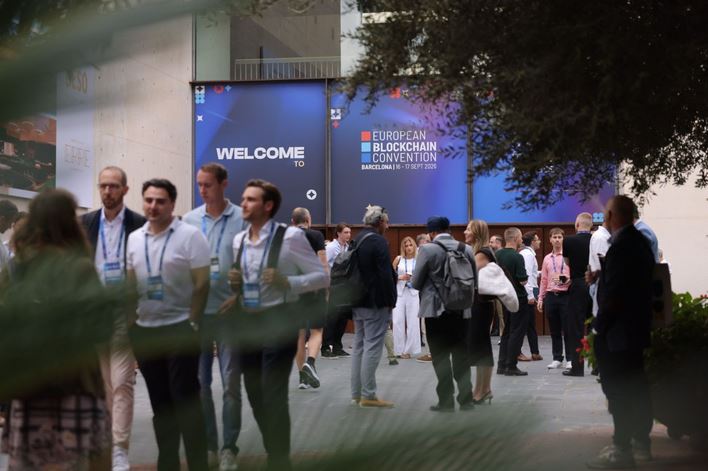
Tokenisation starts showing its economic value
The conversation around tokenisation has changed.
Early pilots were designed to prove assets could be issued and transferred on blockchain rails. Today, firms are increasingly asking where the economic benefits actually appear.
Sladjan Seferović of SWIAT pointed to collateral management as one of the clearest examples, where faster mobilisation can reduce operational steps, improve financing flexibility and allow transactions such as repos to settle within minutes.
Martha Reyes of Fidelity Digital Assets added another dimension: interest in blockchain-based financial products is also helping investment teams build greater familiarity with the broader crypto market.
The question is moving from “Can we tokenise this?” to “Where does tokenisation create enough value to justify using it?”
Check out the panel on tokenisation here.

Capital is coming, but conviction is still developing
Large allocators are clearly paying closer attention, although that does not mean capital is flooding into the market overnight.
During a session on investment flows, Radoslav Poljasevic of LO:TECH described participation from traditional investors as meaningful but still relatively small compared with allocations going into areas such as equities and AI.
Anna Dinescu of Hilbert Capital, however, pointed to growing engagement from major hedge funds and the expansion of tokenised products as signs that larger players are getting closer.
The direction of travel appears clear. The remaining question is how quickly interest turns into meaningful portfolio exposure.
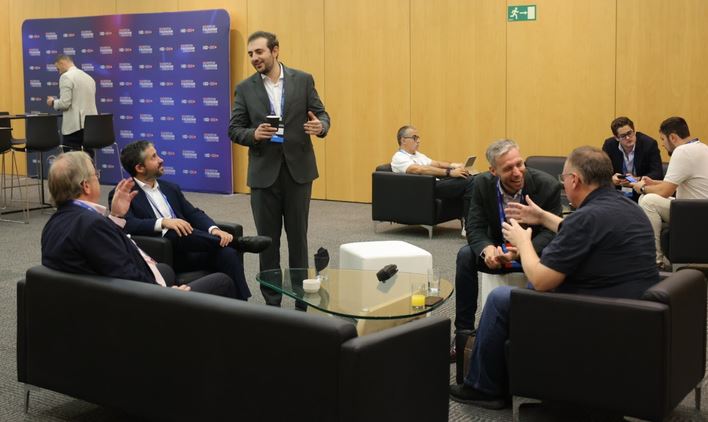
Always-on markets start becoming real
Some of the most concrete announcements of the day came from firms already rebuilding their market architecture.
Nadine Teychenne of Citi highlighted the potential of real-time settlement, programmable assets and an always-on source of truth, pointing to the bank’s work across wallet technology and live tokenised deposits.
Meanwhile, Darko Hajdukovic of LSEG shared plans including a move towards 24/5 trading, a digital securities depository, tokenised equities and new interoperability initiatives.
These projects show a market moving beyond experimentation.
The challenge now is connecting new rails with existing capital markets without sacrificing the controls, resilience and liquidity institutions depend on.
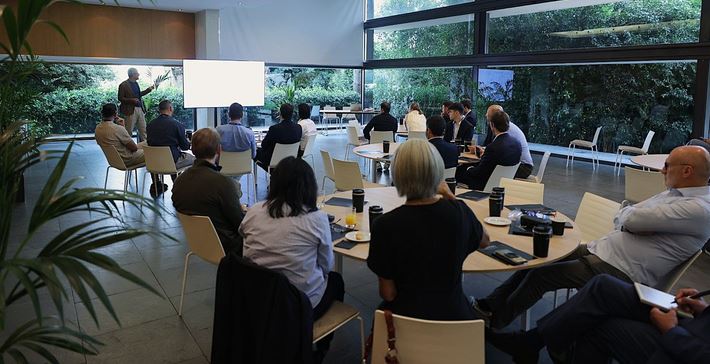
Crypto ETFs enter their next phase
After the initial excitement around crypto ETFs and ETPs, attention is turning towards how these products fit into portfolios over the longer term.
Nikhil Sharma of BlackRock argued that Bitcoin’s fundamental characteristics remain intact even as flows fluctuate.
Kean Gilbert of Lido highlighted another factor investors need to consider when evaluating proof-of-stake networks: staking returns should be assessed alongside other sources of investment income.
And Dovile Silenskyte of WisdomTree made the case for professionally constructed baskets rather than indiscriminate exposure across tokens.
The first wave was about access. The next is about portfolio construction, product design and understanding exactly what exposure investors are buying.
Check out the panel here.
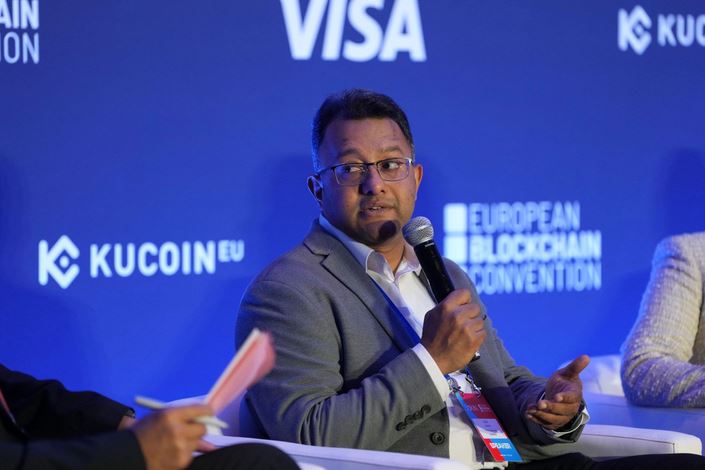
MiCA enters its next chapter
Europe’s regulatory framework is also being tested against a fast-changing market.
During the session on the ongoing MiCA review, speakers explored areas ranging from e-money tokens and settlement assets to supervision and the relationship between EU-level oversight and national expertise.
The European Commission’s targeted review remains open until 30 September 2026, gathering feedback on whether the current framework remains fit for purpose following its initial implementation.
Stephen Mögelin of BaFin stressed that any changes need to consider not only supervisory consistency, but also the practical experience and market knowledge that currently sits at member-state level.
For firms operating across Europe, the next evolution of MiCA could have a direct impact on how products are authorised, supervised and distributed.

Custody remains one of the hardest pieces to solve
As access improves, custody continues to sit at the centre of the adoption debate.
The industry now offers everything from self-custody to bank-grade solutions and regulated intermediaries.
But choosing between those models still requires institutions to balance control, operational complexity, risk and client expectations.
That tension became particularly clear when Michal Nydrle of Trezor described how even large organisations are still working through basic questions around how crypto assets should be held and managed.
Access may be getting easier. The machinery required to manage these assets safely at scale is still evolving.
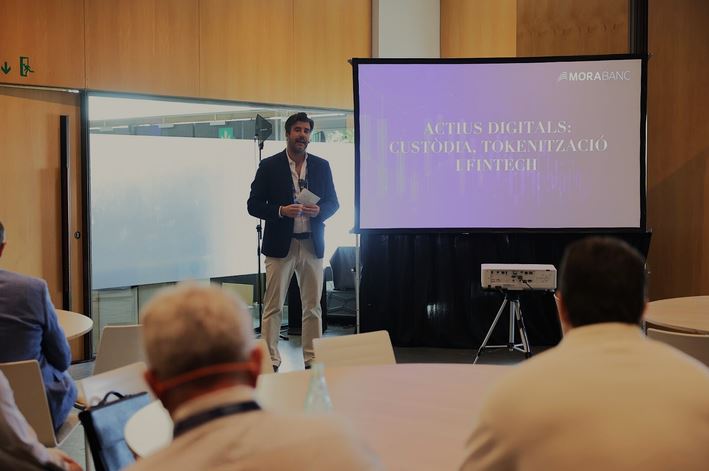
Two days, one clear direction
Across EBC12, the conversation moved well beyond whether blockchain belongs in finance.
Day 1 centred on regulation, custody, tokenised money and the systems needed to connect traditional markets with onchain rails.
Day 2 pushed further into application: where tokenisation generates returns, how portfolios are changing, how exchanges and banks are preparing for always-on markets, and what investors actually need before deploying more capital.
The technology is increasingly becoming part of the financial stack.
Now comes the harder part: making it useful, scalable and commercially relevant.
A huge thank you to our speakers, sponsors, partners and everyone who joined us in Barcelona and made these two days possible.